Metal cutting tools are an essential part of any machinist or engineer's toolkit. Whether you're working with steel, aluminium, brass, or any other material, these tools will help you get the job done. In this blog post, we will explore the 7 different types of metal cutting tools and their uses. From lathe's and end mills to drill bits and saws, each tool has a specific purpose. Keep reading to learn more about these essential tools and how to use them.
Cutting Tools
There are many different types of cutting tools that can be used to cut metal. The most common type of cutting tool is the hand saw. A hand saw can be used to cut through metal that is up to 1/8 inch thick. If you need to cut through thicker metal, you will need to use a power saw.
The next type of cutting tool is the power drill. A power drill can be used to make holes in metal. You can also use a power drill to add threads to a hole that has already been drilled.
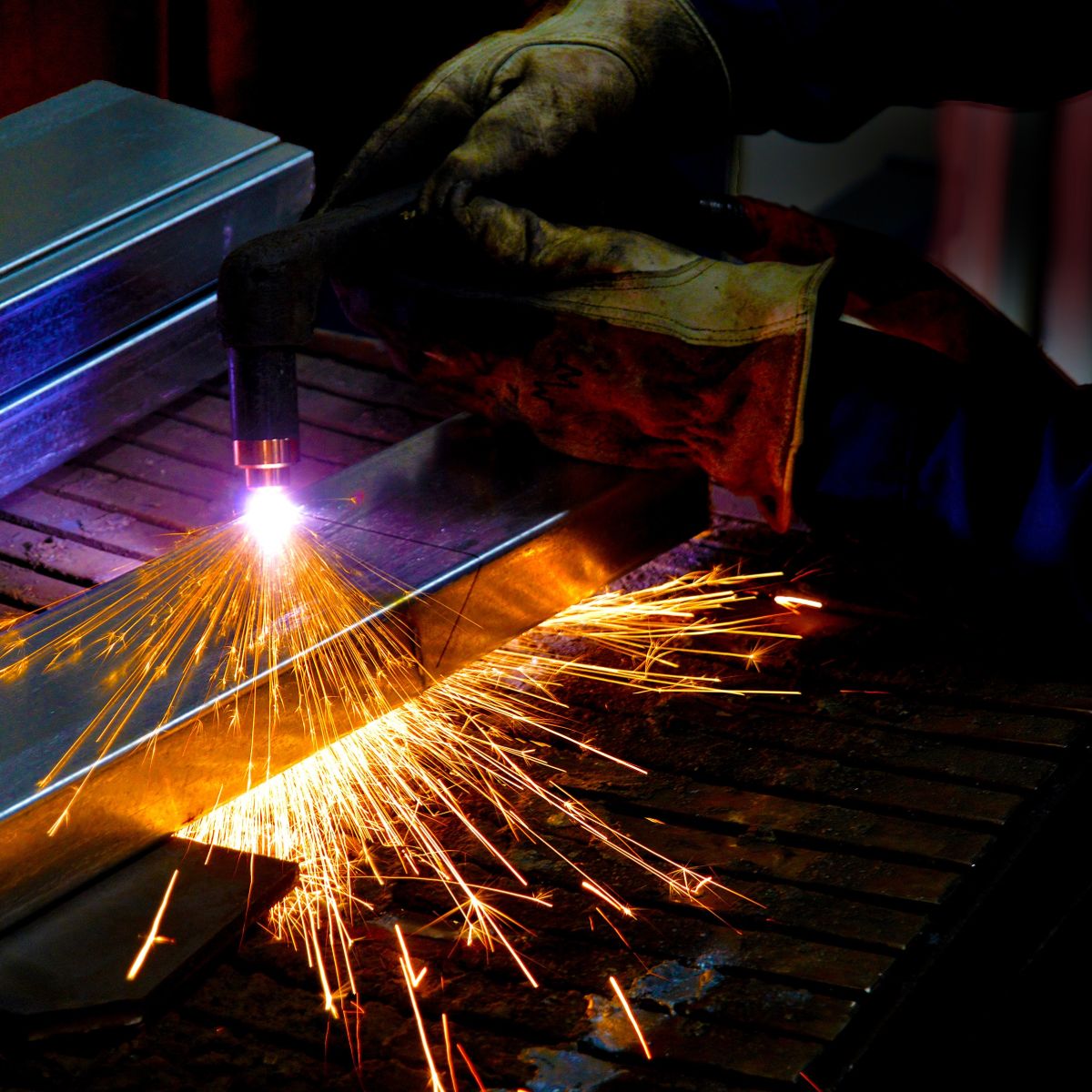
The last type of cutting tool that we will discuss is the plasma cutter. A plasma cutter uses a high-powered laser to cut through metal. Plasma cutters are very accurate and can cut through metal quickly.
Drilling Tools
There are a few different types of drilling tools, each with its specific use. The most common type is the twist drill, which is used to create cylindrical holes. Another type is the reamer, which is used to enlarge or finish a hole that has already been drilled. The final type is the tap, which is used to create internal threads in a hole.
Tapping Tools
There are many different types of metal cutting tools, each with its specific uses. Here is a rundown of the most common tapping tools and their uses:
-Drill bits are the most common type of metal cutting tool. They come in a variety of sizes and shapes and can be used to drill holes in all sorts of materials, including wood, plastic, and metal.
-End mills are another common type of metal cutting tool. They look like drill bits but have a different shape that allows them to mill or cut away material from the sides of a workpiece.
-Reamers are yet another type of metal cutting tool. They are used to enlarge existing holes or to finish off the edges of drilled holes.
-Taps are used to create internal threads in a hole. There are many different types of taps, including hand taps, machine taps, and thread-forming taps.
Reaming Tools
Reaming tools are used to enlarge and finish existing holes. They can be used to create a new hole or to enlarge an existing one. Reaming tools come in a variety of sizes and shapes, and can be used on a variety of materials.
There are two main types of reaming: hand reaming and machine reaming. Hand reaming is the process of enlarging a hole with a hand-held tool. Machine reaming is the process of enlarging a hole with a machine-mounted tool.
Machine reaming is more precise than hand reaming, and is typically used for larger holes. Hand reaming is more versatile, and can be used on smaller holes.
Reaming tools are made from a variety of materials, including high-speed steel (HSS), carbide, and diamond. HSS is the most common material for reaming tools, as it is both strong and affordable. Carbide is more expensive than HSS but is also harder and more wear-resistant. Diamond is the hardest material available, making it ideal for finishing delicate workpieces.
Milling Tools
Milling tools are cutting tools that are used to remove material from a workpiece using a rotating cutting action. The milling process can be done with a variety of different tools, including end mills, ball nose mills, and roughing end mills.
End mills are the most common type of milling tool and are used for machining both flat surfaces and curved surfaces. Ball nose mills are used for machining contoured surfaces while roughing end mills are used for removing large amounts of material quickly.
Sawing Tools
There are many different types of sawing tools available on the market, each designed for a specific type of metal-cutting application. The most common saws used for cutting metal are circular saws, band saws, and chop saws.
Circular Saws: Circular saws are handheld or table-mounted power tools that use a rotating blade to cut through metal. They are available in a variety of sizes and can be used to cut metal thicknesses up to several inche's thick. Band Saws: Band saws are stationary power tools that use a long, continuous blade to cut through metal. They are available in a variety of sizes and can be used to cut metal thicknesses up to several inche's thick. Chop saws: Chopsaws are handheld power tools that use a reciprocating blade to make quick, rough cuts in metal. They are typically used for cutting thin metals such as sheet metal or pipe.
Grinding Tools
There are a variety of grinding tools available on the market, each designed for a specific purpose. Here is a brief overview of some of the most common types of grinding tools:
-Abrasive belts are used to grind and smooth surfaces.
-Belt grinders are used to remove material from metal workpieces.
-Bench grinders are handheld devices that can be used to grind, buff, and polish metal surfaces.
-Centerless grinders are used to create a cylindrical shape on metal workpieces.
-Cylindrical grinders are used to create a round, polished finish on metal surfaces.
Metal Cutting Tools
There are many different types of metal cutting tools, each with its unique purpose and function. Here are just a few of the most common types of metal-cutting tools and their uses:
- Hacksaw: A hacksaw is a hand-held saw that is used for cutting metal. It has a thin, sharp blade that is attached to a handle.
- Jigsaw: A jigsaw is a powerful tool that is used for cutting curved or irregular shapes in metal. It has a blade with teeth that can be adjusted to create different shapes.
- Band Saw: A band saw is a powerful tool that is used for cutting long, straight pieces of metal. It has a long, continuous blade that is mounted on two wheels.
- Lathe: A lathe is a machine that is used for shaping metal (or other materials) by rotating it against a cutting tool. This process is called "turning".
- Drill: A drill is a powerful tool that is used for making holes in metal (or other materials). It has a rotating bit (or drill bit) that cuts through the material as it turns.
Cutting Tool Applications
There is a wide variety of cutting tools available on the market, each designed for a specific purpose. In this section, we'll take a look at some of the most common types of metal cutting tools and their uses.
End Mills: End mills are one of the most versatile types of cutting tools, capable of performing a variety of operations such as slotting, pocketing, and profiling. They can be used on both ferrous and non-ferrous materials.
Drill Bits: Drill bits are designed specifically for drilling holes in various materials. They are available in a variety of sizes and shapes to suit different applications.
Reamers: Reamers are used to enlarge or finish existing holes. They are available in both hand and machine varieties.
Taps and Dies: Taps and dies are specialized tools used for threading operations. Taps create new threads, while dies cut threads into an existing workpiece.
Manufacture of Carbide Products
Carbide products are manufactured using a process called sintering. In this process, powdered carbide is placed in a mould and heated to a high temperature. The heat causes the particles to fuse, forming a solid piece.
This manufacturing process is used to create a variety of carbide products, including:
- Carbide cutting tools: These tools are used for machining operations such as drilling, milling, and turning. They are made from carbide materials that are extremely hard and wear-resistant.
- Carbide wear parts: These parts are used in applications where high levels of wear and abrasion resistance are required. They are often made from tungsten carbide, which is one of the hardest materials known.
- Carbide dies: Dies are tools that are used to shape metal or other materials. They can be made from various types of carbide, depending on the material being worked with.